




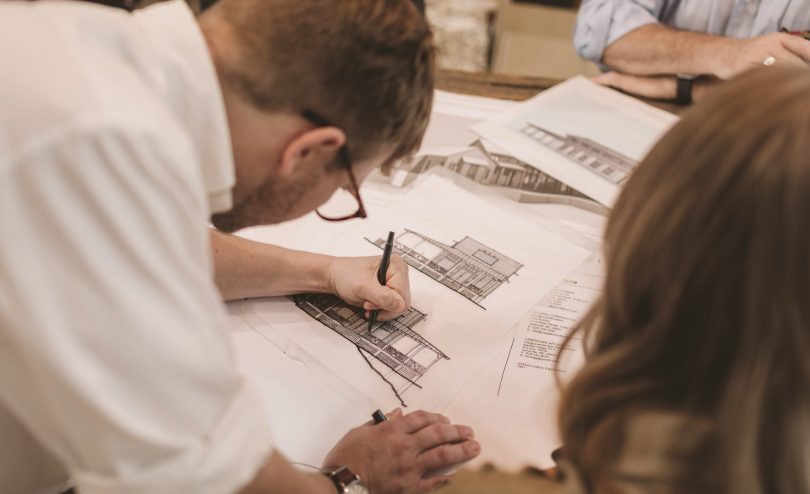
At Pearce Scott Architects, some of our most important design decisions do not begin on a screen. They start with a pen, a roll of trace paper, and a quick sketch – often made early in the day, before details or deadlines take over.
Hand drawing is how we begin to understand a place. Long before a wall is detailed or a rendering is produced, sketching allows us to explore ideas freely and intuitively. It’s fast, flexible, and deeply human – and in many ways, it remains the most direct path from imagination to home.
A sketch carries feeling as much as information. The weight of a line, the looseness of a stroke, even what’s left unfinished, can suggest how a space might feel to live in. While digital tools are essential to modern practice, sketching is still the quickest way to test ideas – how a porch might catch the morning light, how rooms connect, or how a roofline settles naturally into the landscape.

“Sketching is how we think out loud on paper,” says Pearce Scott. “A computer can document a design, but a sketch helps you discover it. You can feel when a space is right before you can fully explain why.”
That sense of discovery is especially important in residential design. A few simple lines can suggest how sunlight moves through a living room, how a window frames a long view of marsh or water, or how indoor spaces open easily to the outdoors. These early drawings aren’t about polish or precision – they’re about atmosphere, comfort, and the rhythm of daily life.
Architect Evan Goodwin describes the process as an evolution. “We often start with very rough sketches to study how a home sits on its site – its massing, its relationship to the land, and the way it captures views. Those sketches build on one another, becoming more refined over time, until they eventually turn into the finished design.”
From the first line on trace paper to the final set of plans, sketching keeps the focus where it belongs: creating homes that feel connected to their surroundings and thoughtfully shaped for the people who live in them.